Thrissur Pooram is not simply a temple festival. It is the single largest cultural event in Kerala, drawing over a million spectators to the grounds of the Vadakkunnathan Temple every year during the Malayalam month of Medam (April or May). Founded by Sakthan Thampuran, the ruler of Cochin, in 1798, the festival was conceived as a grand unification of the region's temple traditions, bringing together deities from ten participating temples in a spectacular display of pageantry, music, and gold.
The Elephants and Their Gold
The most iconic image of Thrissur Pooram is the row of caparisoned elephants, each one adorned with the nettipattam, an elaborate gold-plated forehead ornament. The nettipattam is a masterwork of goldsmithing that can weigh over 10 kilograms and stands nearly a metre tall. It features images of deities, mythological scenes, and floral motifs, all rendered in gold sheet over a wooden frame using techniques identical to those used in jewellery making: repousse, chasing, and engraving.
Behind each elephant stands a trio of men holding the ceremonial umbrella (muthukkuda), the yak-tail fan (venchamaram), and the peacock-feather fan (aalavattam). These ceremonial objects are trimmed with gold and silver, and their creation is entrusted to the same goldsmith families who make the temple jewellery. In Thrissur, there is no sharp line between the goldsmith who makes a bride's Lakshmi Haar and the one who crafts an elephant's nettipattam. They are often the same person.
Gold in the Procession
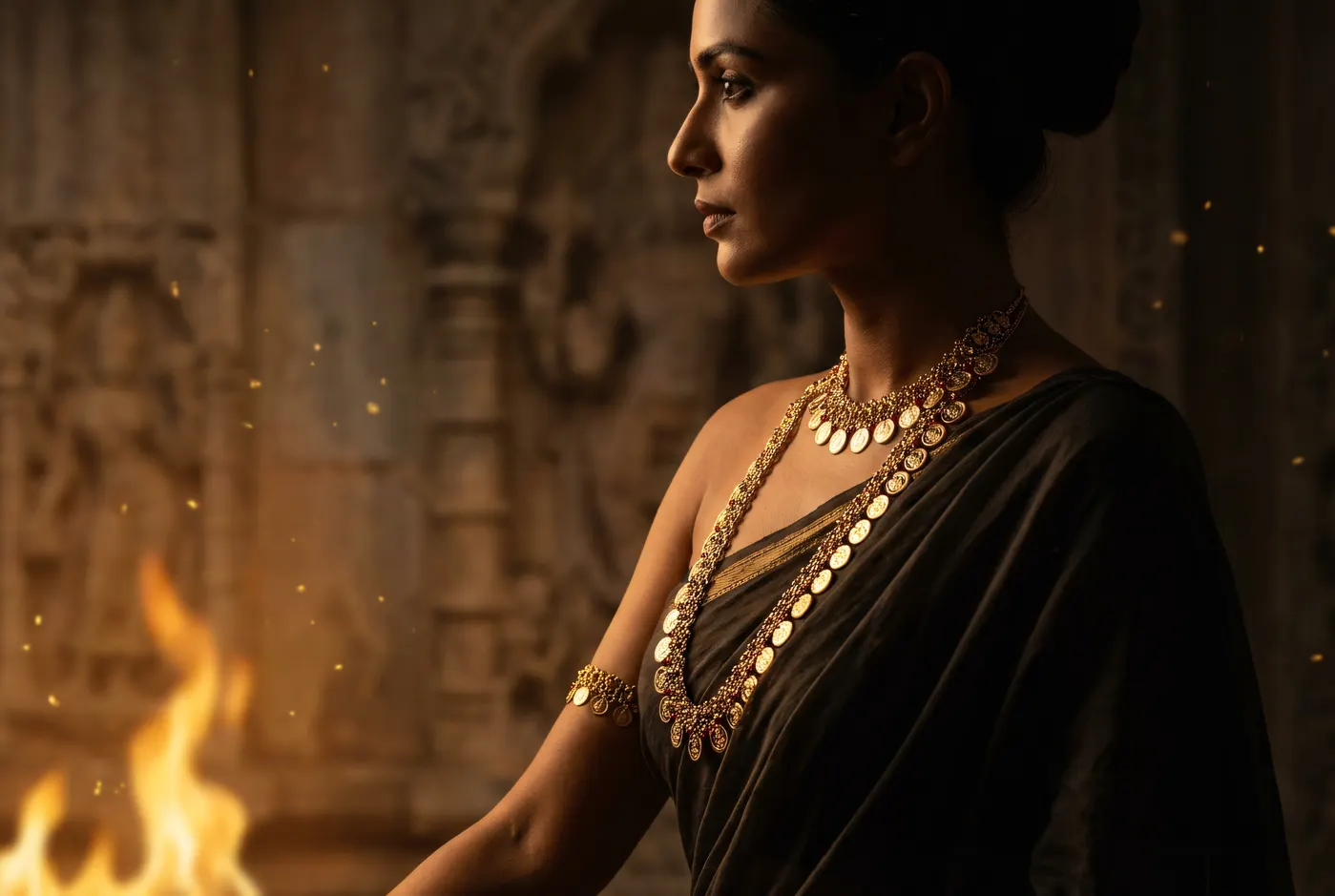
During the Pooram procession, the deities from each participating temple are carried on the elephants in gold and silver palanquins. The deities themselves wear miniature versions of the same jewellery that human devotees wear: Lakshmi Haars, Kasu Malas, and ornate crowns (kireedam). These deity ornaments are among the most meticulously crafted pieces in the goldsmith's repertoire, because they must be both lightweight enough for the processional and detailed enough to honour the god they adorn.
The devotees who attend Pooram also wear their finest gold. For many Kerala families, Pooram is the occasion that motivates the purchase of new jewellery. Goldsmiths in Thrissur report that the months leading up to Pooram are their busiest season, with orders for new Kasu Malas, Manga Malas, and jhumka earrings reaching peak demand. The festival functions as both a religious celebration and an informal showcase of the region's goldsmithing excellence.
The Kudamattam
The climax of Thrissur Pooram is the Kudamattam, or umbrella ceremony, in which teams from the two principal temples compete by rapidly changing a sequence of ornamental parasols above their elephants. Each parasol is a work of art, decorated with gold and silver embroidery, silk, and mirror work. The rapid exchange of dozens of parasols in coordinated sequence, accompanied by the thundering Panchavadyam (five-instrument ensemble), creates one of the most visually overwhelming spectacles in Indian culture.
For Thrissur's goldsmiths, Pooram is a reminder of why their craft matters. The festival makes visible what jewellery-making makes intimate: the belief that gold is not just a metal but a medium through which humans express their deepest relationship with the divine.
"In Thrissur, gold is not locked in vaults. It walks through the streets on the backs of elephants, hangs from the ears of grandmothers, and catches the firelight of a thousand oil lamps during Pooram."