A Kerala Hindu wedding is one of the most gold-intensive ceremonies in the world. The bride wears not one necklace but several, layered from the throat to below the chest, each one carrying a distinct meaning, technique, and visual rhythm. Together, they form a composition that is as much about tradition as it is about beauty. If you are planning a Kerala wedding, or simply want to understand the jewellery that defines this tradition, these are the five necklaces you need to know.
I. Lakshmi Haar
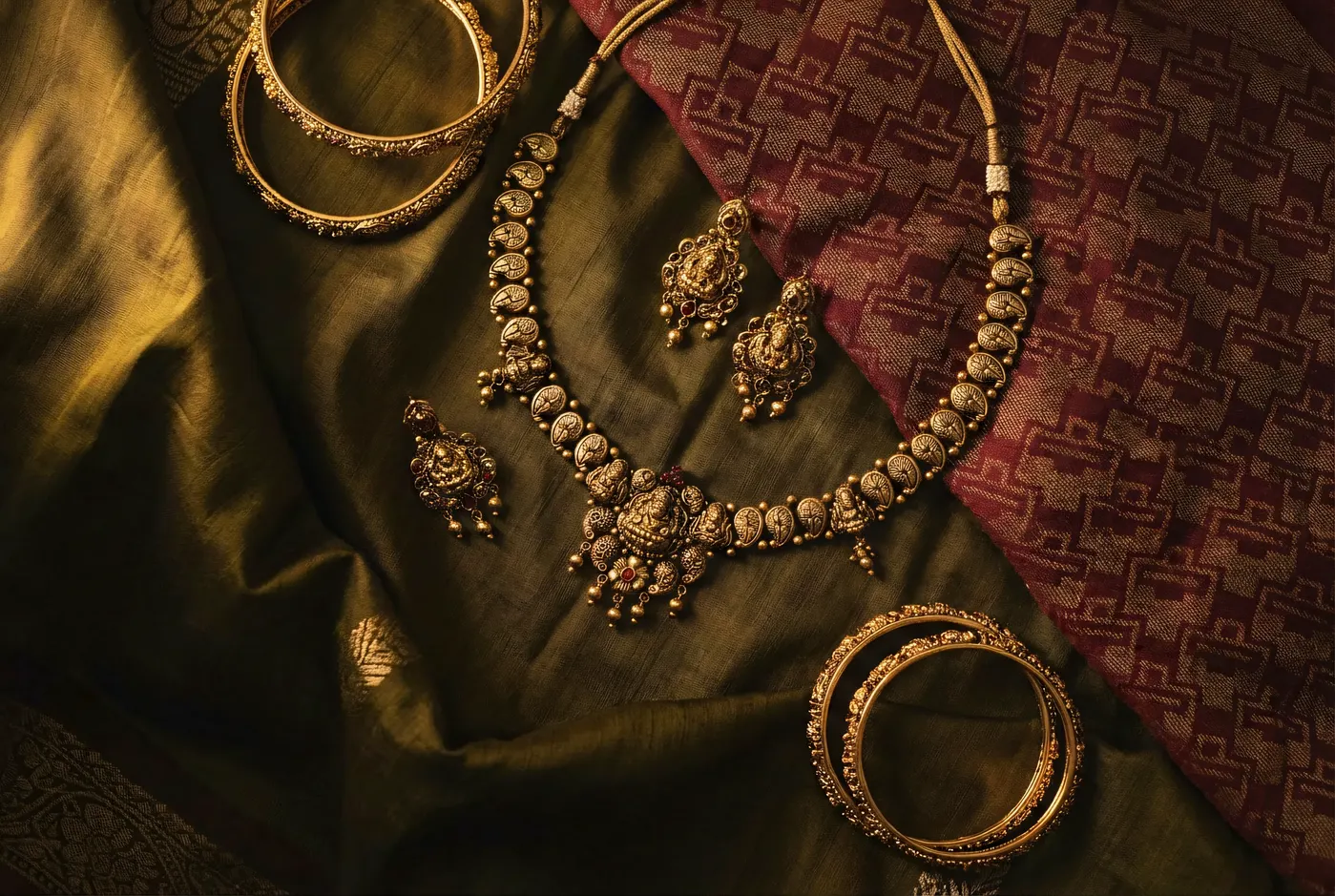
The Lakshmi Haar is the centrepiece of the Kerala bridal set. It is a long, graduated necklace featuring rows of deity medallions, each carved with the image of Goddess Lakshmi seated on her lotus, flanked by elephants performing abhishekam (the sacred anointing). The medallions are crafted using the nakshi technique, in which a goldsmith carves the image directly into the gold surface using fine steel tools. A single Lakshmi Haar may take six to eight weeks to complete, passing through the hands of over forty artisans: designers, wax modellers, casters, chasers, polishers, and stringers.
The Lakshmi Haar is traditionally the longest necklace in the bridal set, falling to the mid-chest. It is worn as the outermost layer, over the Kasu Mala and other shorter pieces. Its weight, typically between 80 and 200 grams depending on the design, gives it a characteristic drape that moves with the bride's body.
II. Kasu Mala
The Kasu Mala, or coin necklace, is composed of gold coins (kasu) linked together in a long chain. Each coin is individually die-stamped with the image of Lakshmi, using a hardened steel die and a precise hammer blow. The art of coin-stamping in Kerala dates back to the Chera dynasty (approximately 3rd century BCE to 12th century CE), when gold coins bearing Lakshmi's image circulated as currency in the Malabar region.
In a bridal set, the Kasu Mala is typically worn as the second-longest necklace, layered beneath the Lakshmi Haar. Its coins catch light individually as they move, creating a shimmering, fluid effect that contrasts beautifully with the more sculptural Lakshmi Haar above it. The Kasu Mala is also one of the most popular necklaces for grooms, worn over the wedding sherwani or mundu.
III. Palakka Mala
The Palakka Mala is Kerala's signature leaf necklace. It features a series of leaf-shaped (palakka) gold units, each set with a green stone, traditionally an emerald or green glass. The necklace is shorter than the Lakshmi Haar or Kasu Mala and sits closer to the collarbone, creating the first visible layer of the bridal set.
The green of the Palakka Mala against the gold is one of the most instantly recognisable colour combinations in Indian jewellery. It represents the lush tropical landscape of Kerala, where green is the dominant colour of daily life. The Palakka Mala is particularly significant in Nair and Namboothiri wedding traditions, where it has been part of the bridal trousseau for centuries.
IV. Manga Mala
The Manga Mala features a chain of mango-shaped (manga) or paisley pendants. The mango motif is sacred in Hindu culture, representing fertility, abundance, and the sweetness of life. It appears across Indian art forms, from textile block prints to temple carvings, and in Kerala it finds its most elegant expression in the Manga Mala.
Each mango unit is cast using the lost-wax process and finished by hand. Some versions feature plain gold mangoes; others are embellished with ruby or emerald accents. The Manga Mala sits at a medium length in the bridal layering, typically between the Palakka Mala and the Kasu Mala. It is one of the few traditionally unisex pieces in Kerala jewellery, worn by both men and women during temple festivals.
V. Nagapada Thali
The Nagapada Thali is the most spiritually charged piece in the bridal set. Its centrepiece is a pendant in the form of a cobra's hood (nagapada), rendered in gold using the repousse technique. In Kerala, snake worship (Nagaradhana) is deeply embedded in the culture. Most ancestral Nair homes maintain a serpent grove (Sarpa Kavu) within the family compound, and the Nagapada Thali carries this reverence into the marriage ceremony.
Unlike the other necklaces, the Nagapada Thali is a single pendant on a chain rather than a series of linked elements. It is worn as the innermost necklace, closest to the heart, reflecting its role as the most intimate and protective piece in the set. The serpent is believed to guard the wearer against negative energies and ensure fertility and prosperity in the marriage.
The Art of Layering
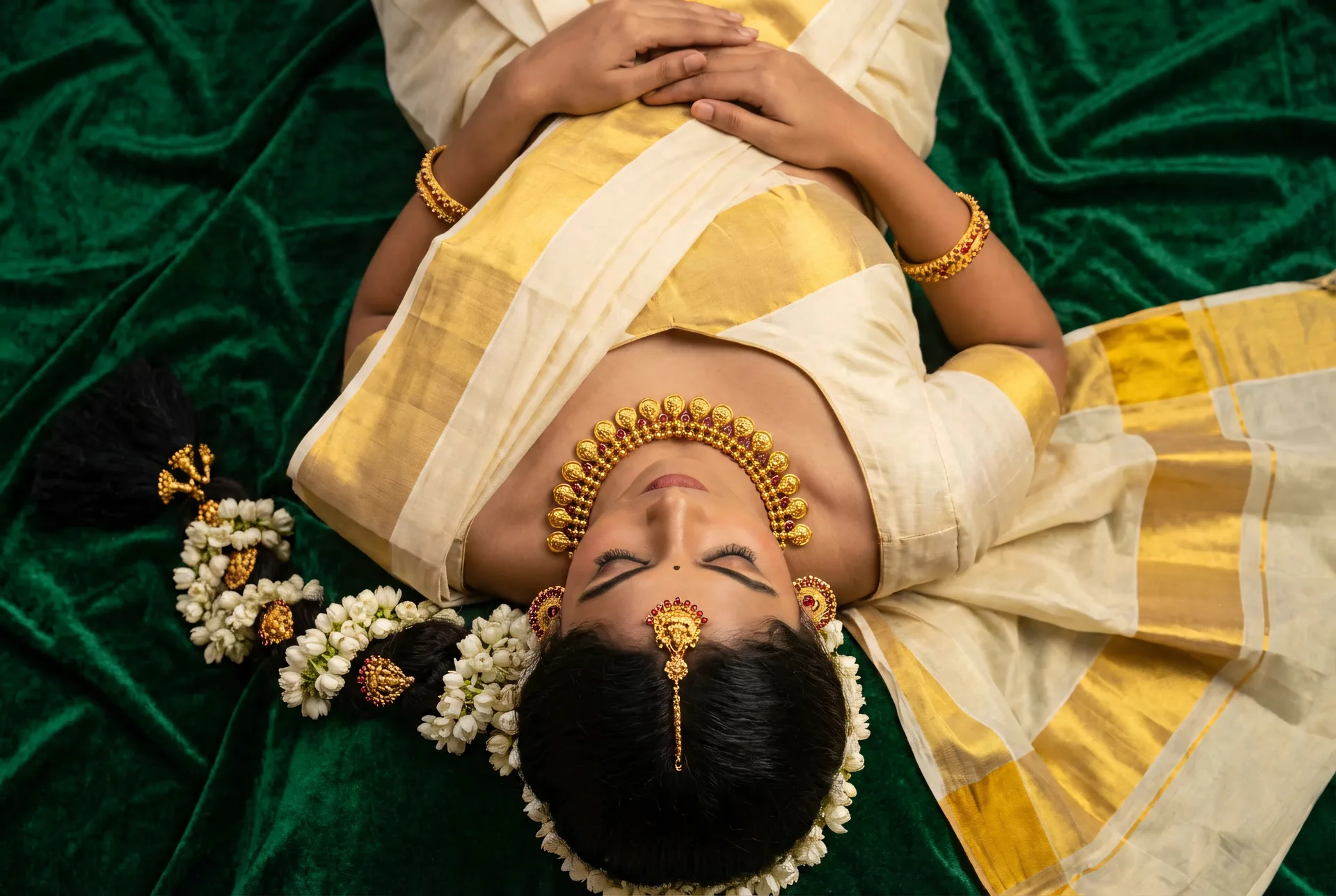
The beauty of the Kerala bridal set lies not in any single piece but in how the five necklaces work together. The Palakka Mala sits at the collarbone, its green stones creating a base of colour. The Manga Mala falls just below, its rhythmic paisley shapes establishing a visual tempo. The Kasu Mala extends further, its coins shimmering with movement. The Lakshmi Haar descends last, its sculptural medallions providing the visual climax. And beneath everything, invisible to onlookers but felt by the bride, the Nagapada Thali rests against the skin, a silent guardian.
This is jewellery as architecture: each layer builds upon the last, creating a composition that is simultaneously ancient and alive.
"A Kerala bride does not wear jewellery. She wears a story, layered from the collarbone to the heart, and every chapter has been written in gold."